Login with Patreon to Remove Ads

Globalstar 2-R Mission 1 (x 9)

Falcon 9 Block 5

SpaceX

00
MTH
00
DAY
00
HR
00
MIN
00
SEC
Launch Status
Date/Time May Change

Rocket Launch Video

SpaceX: Globalstar 2-R Launch 1 Mission

Trajectory

View comprehensive details including the rocket's trajectory, velocity, altitude, thrust, and more at FlightClub.io.

Learn more about rocket launch trajectories

Rocket Launch Timeline

Enhance your rocket launch experience with a detailed timeline! From pre-launch preparations to post-launch milestones, a well-structured schedule ensures every step—payload prep, safety checks, and liftoff—runs smoothly. Stay informed and follow the action with precision.

View the launch timeline

T- 00 : 38 : 00 GO for Prop Load
Launch director verifies go for propellant load
T- 00 : 35 : 00 Stage 1 LOX Load
Start of liquid oxygen loading in the first stage
T- 00 : 35 : 00 Prop Load
Start of propelland loading
T- 00 : 16 : 00 Stage 2 LOX Load
Start of liquid oxygen loading in the second stage
T- 00 : 07 : 00 Engine Chill
Start of engine chilling
T- 00 : 01 : 00 Startup
The onboard computer takes control over the countdown and runs last checks
T- 00 : 01 : 00 Tank Press
Fuel tanks are pressurized to flight levels
T- 00 : 00 : 45 GO for Launch
Launch director verifies go for launch
T- 00 : 00 : 03 Ignition
Start of the engine ignition sequence
T+ 00 : 00 : 00 Liftoff
First upwards movement of the rocket
T+ 00 : 01 : 09 Max-Q
Maximum dynamic pressure
T+ 00 : 02 : 26 MECO
Cut-off of the main engine
T+ 00 : 02 : 30 Stage 2 Separation
Separation of the second stage from the first
T+ 00 : 02 : 37 SES-1
First start of the second engine
T+ 00 : 03 : 09 Fairing Separation
Separation of the payload fairing
T+ 00 : 06 : 40 Entry Burn Startup
Start of the atmospheric entry burn
T+ 00 : 07 : 03 Entry Burn Shutdown
End of the atmospheric entry burn
T+ 00 : 08 : 14 SECO-1
First cut-off of the second engine
T+ 00 : 08 : 25 Stage 1 Landing Burn
Start of the first stage landing burn
T+ 00 : 08 : 49 Stage 1 Landing
Landing of the first stage
T+ 00 : 53 : 20 SES-2
Second start of the second engine
T+ 00 : 53 : 36 SECO-2
Second cut-off of the second engine
T+ 01 : 01 : 37 Payload Deployment Sequence Start
Start of the payload deployment sequence
T+ 01 : 08 : 17 Payload Deployment Sequence End
End of the payload deployment sequence.

Mission

Globalstar 2-R Mission 1 (x 9)

  • Type: Communications
  • Orbit: Low Earth Orbit
  • Launch Cost: $52,000,000

The Globalstar global mobile communications network offers global, digital real time voice, data and fax services via its Low Earth Orbit satellite constellation. The constellation operates in a 1410 km orbit inclined at 52 degrees.

In early 2022, Globalstar contracted with MDA for the construction of 17 new 2nd generation refresh satellites to replenish the existing constellation. Rocket Lab is sub-contracted to build the satellites' buses and the launch dispensers.

Location

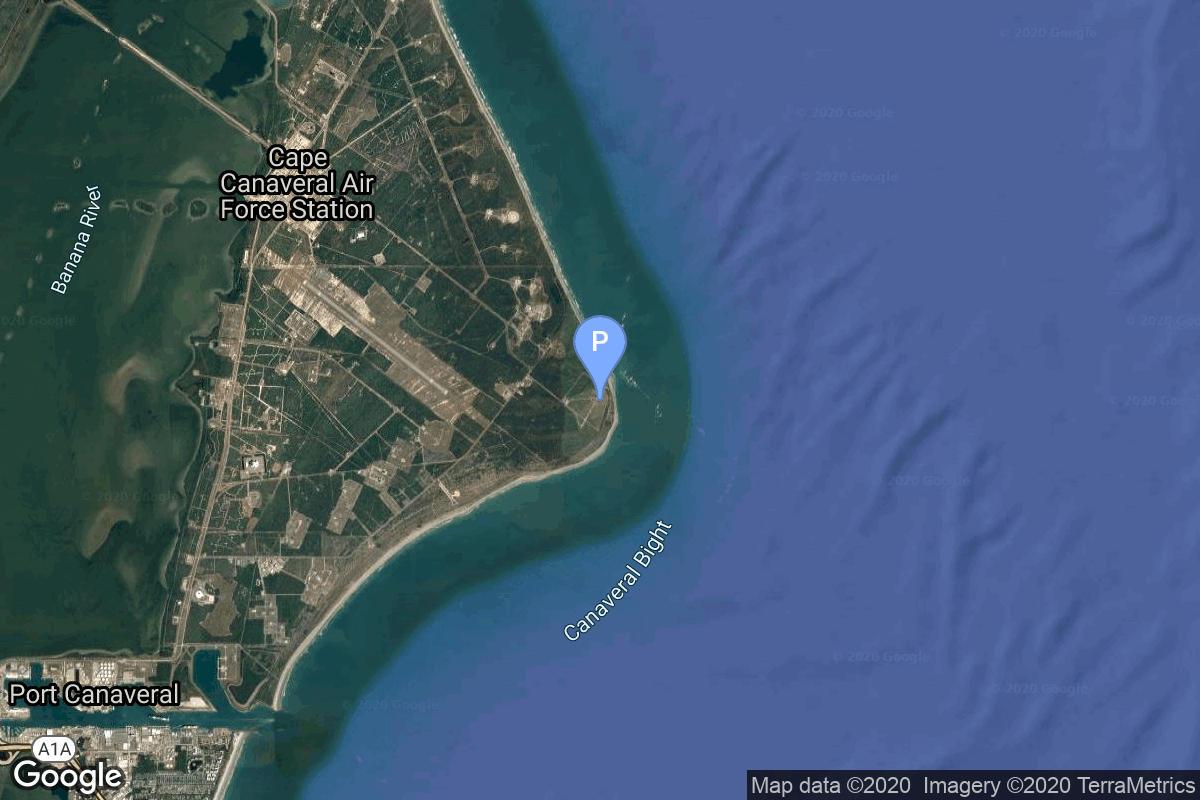
Space Launch Complex 40

Cape Canaveral SFS, FL, USA

Find the best place to watch the launch from Florida

Space Launch Complex 40 has witnessed the launch of 387 rockets, including 387 orbital launch attempts. While Cape Canaveral SFS, FL, USA, has been the site for 1114 rocket launches.

Cape Canaveral Space Force Station (CCSFS) is an installation of the United States Space Force's Space Launch Delta 45, located on Cape Canaveral in Brevard County, Florida.
Rocket

SpaceX Falcon 9 Block 5

Falcon 9 is a two-stage rocket designed and manufactured by SpaceX for the reliable and safe transport of satellites and the Dragon spacecraft into orbit. The Block 5 variant is the fifth major interval aimed at improving upon the ability for rapid reusability.

Learn more about the Falcon 9 Block 5

Landing

The Falcon 9 first stage will land on ASDS ASOG after its flight. The booster serial number is unknown at this time. Check back for more details about the booster.

A Shortfall of Gravitas - ASOG

The fourth ASDS barge, A Shortfall of Gravitas (ASOG) is currently used to recover Falcon 9 and Heavy boosters in the Altantic Ocean.

Autonomous Spaceport Drone Ship - ASDS

An autonomous spaceport drone ship (ASDS) is an ocean-going vessel derived from a deck barge, outfitted with station-keeping engines and a large landing platform. Construction of such ships was commissioned by aerospace company SpaceX to allow for recovery of rocket first-stages at sea for high-velocity missions which do not carry enough fuel to return to the launch site after lofting spacecraft onto an orbital trajectory.

Agency

SpaceX

Space Exploration Technologies Corp., known as SpaceX, is an American aerospace manufacturer and space transport services company headquartered in Hawthorne, California. It was founded in 2002 by entrepreneur Elon Musk with the goal of reducing space transportation costs and enabling the colonization of Mars. SpaceX operates from many pads, on the East Coast of the US they operate from SLC-40 at Cape Canaveral Space Force Station and historic LC-39A at Kennedy Space Center. They also operate from SLC-4E at Vandenberg Space Force Base, California, usually for polar launches. Another launch site is being developed at Boca Chica, Texas.


Learn more about SpaceX

Last Updated:
Leave a Reply

Your email address will not be published. Required fields are marked *