Flight 12
Starship
SpaceX
Trajectory
View comprehensive details including the rocket's trajectory, velocity, altitude, thrust, and more at FlightClub.io.
Rocket Launch Timeline
Enhance your rocket launch experience with a detailed timeline! From pre-launch preparations to post-launch milestones, a well-structured schedule ensures every step—payload prep, safety checks, and liftoff—runs smoothly. Stay informed and follow the action with precision.
| T- 00 : 50 : 00 | GO for Prop Load Launch director verifies go for propellant load |
| T- 00 : 38 : 53 | Stage 2 LOX Load Start of liquid oxygen loading in the second stage |
| T- 00 : 35 : 00 | Stage 1 LOX Load Start of liquid oxygen loading in the first stage |
| T- 00 : 34 : 43 | Stage 1 LNG Load Start of liquid methane loading in the first stage |
| T- 00 : 32 : 59 | Stage 2 LNG Load Start of liquid methane loading in the second stage |
| T- 00 : 21 : 30 | Engine Chill Start of engine chilling |
| T- 00 : 02 : 50 | Stage 1 Propellant Load Complete End of propellant loading in the first stage |
| T- 00 : 02 : 10 | Stage 2 Propellant Load Complete End of propellant loading in the second stage |
| T- 00 : 00 : 30 | GO for Launch Launch director verifies go for launch |
| T- 00 : 00 : 17 | Flame Deflector Activation Activation of the flame deflector ahead of engine ignition |
| T- 00 : 00 : 03 | Ignition Start of the engine ignition sequence |
| T+ 00 : 00 : 00 | Excitement Guaranteed Excitement guaranteed |
| T+ 00 : 00 : 00 | Liftoff First upwards movement of the rocket |
| T+ 00 : 00 : 45 | Max-Q Maximum dynamic pressure |
| T+ 00 : 02 : 22 | MECO Cut-off of the main engine |
| T+ 00 : 02 : 24 | Stage 2 Separation Separation of the second stage from the first |
| T+ 00 : 02 : 30 | Booster Boostback Burn Startup Start of the booster boostback burn |
| T+ 00 : 03 : 30 | Booster Boostback Burn Shutdown End of the booster boostback burn |
| T+ 00 : 06 : 34 | Stage 1 Landing Burn Start of the first stage landing burn |
| T+ 00 : 06 : 59 | Stage 1 Landing Landing of the first stage |
| T+ 00 : 08 : 11 | SECO-1 First cut-off of the second engine |
| T+ 00 : 17 : 37 | Payload Deployment Sequence Start Start of the payload deployment sequence |
| T+ 00 : 27 : 15 | Payload Deployment Sequence End End of the payload deployment sequence. |
| T+ 00 : 38 : 37 | SEB-2 2nd burn of the second engine |
| T+ 00 : 47 : 47 | Atmospheric Entry Start of the atmospheric re-entry |
| T+ 01 : 02 : 29 | Starship Transonic Starship passing through the transonic regime |
| T+ 01 : 03 : 08 | Starship Subsonic Starship reaches a subsonic velocity |
| T+ 01 : 05 : 06 | Starship Landing Burn Start of the Starship orbital stage landing burn |
| T+ 01 : 05 : 08 | Landing Flip Flip maneuver to set the orientation for landing |
| T+ 01 : 05 : 17 | Starship Landing Landing of the Starship orbital stage |
| T+ 01 : 05 : 24 | Starship Landing Landing of the Starship orbital stage |
| T+ 01 : 05 : 26 | Starship Landing Landing of the Starship orbital stage |
Mission
Flight 12
- Type: Test Flight
- Orbit: Suborbital
12th test flight of the two-stage Starship launch vehicle. Maiden Flight of Starship V3.
The flight test’s primary goal will be to demonstrate each of these new pieces in the flight environment for the first time, with each element of the Starship architecture featuring significant redesigns to enable full and rapid reuse that incorporate learnings from years of development and test.
The Starship upper stage will target multiple in-space and reentry objectives, including a payload deployment of 20 Starlink simulators, similar in size to next-generation Starlink V3 satellites, and two specially modified Starlink satellites. The two modified satellites will test hardware planned for Starlink V3 and will attempt to scan Starship’s heat shield and transmit imagery down to operators to test methods of analyzing Starship’s heat shield readiness for return to launch site on future missions. Several tiles on Starship have been painted white to simulate missing tiles and serve as imaging targets in the test. The Starlink simulators will be on the same suborbital trajectory as Starship. A relight of a single Raptor engine while in space is also planned.
For Starship entry, a single heat shield tile has been intentionally removed to measure the aerodynamic load differences on adjacent tiles when there is a tile missing. Finally, the ship will perform experimental actions tested on previous flight tests, including a maneuver to intentionally stress the structural limits of the vehicle’s rear flaps and a dynamic banking maneuver to mimic the trajectory that future missions returning to Starbase will fly.
Location
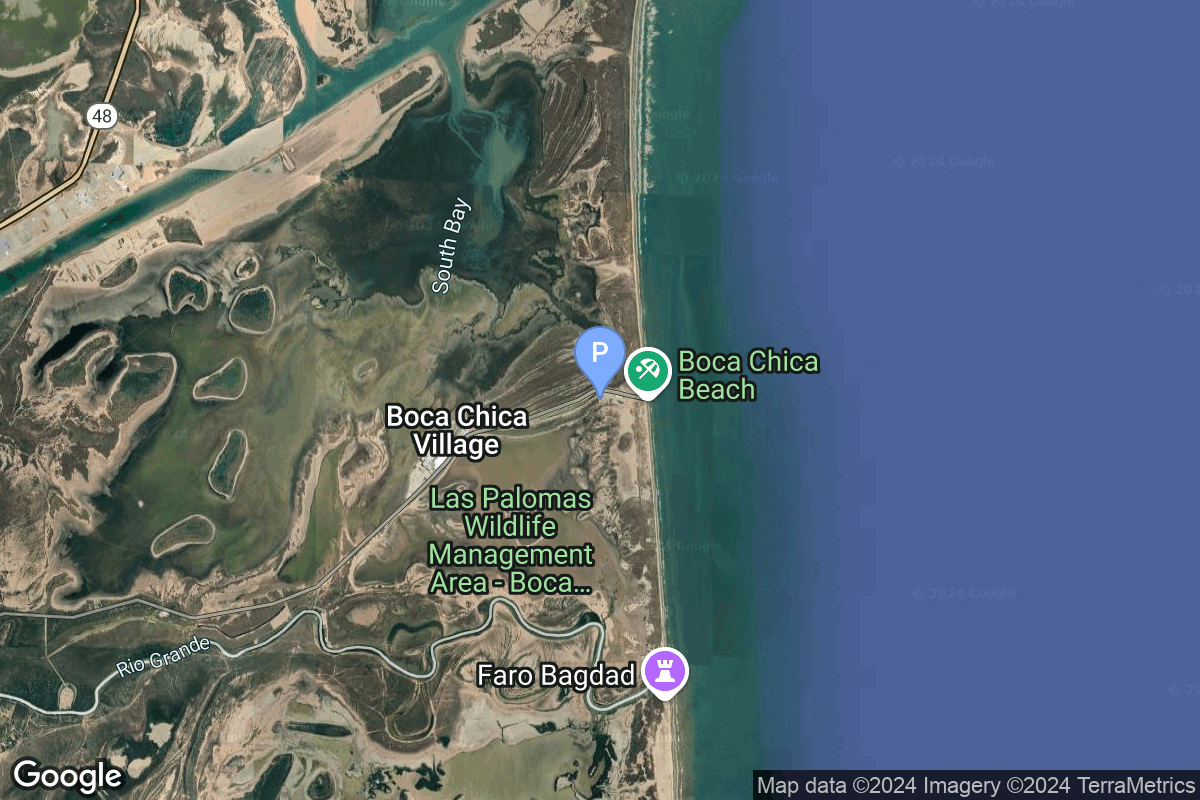
Orbital Launch Pad 2
SpaceX Starbase, TX, USA
Orbital Launch Pad 2 has witnessed the launch of 0 rockets, including 0 orbital launch attempts. While SpaceX Starbase, TX, USA, has been the site for 20 rocket launches.
Starbase is an industrial complex for Starship rockets and the headquarters of the American aerospace manufacturer company SpaceX. Located near Brownsville, Texas, United States, it has been under construction since the late 2010s by SpaceX. Starbase is composed of a spaceport near the Gulf of Mexico, a production facility at the Boca Chica village, and a small structure test site along the Texas State Highway 4.
Rocket
SpaceX Starship V3
Third development version of the Starship reusable two-stage super heavy-lift launch vehicle.
Landing
Core Booster 19
The Super Heavy Booster 19 will make a planned splashdown near the launch site. Booster Booster 19 last launched unknown and has seen 0 successful launches and landings. First Block 3 Super Heavy booster to fly with various enhancements including Raptor 3 engines, integrated interstage and 3 grid fins instead of 4 used. Planned for usage on the 12th Starship flight test, replacing Booster 18 written off during ground testing in November 2025.
Gulf of Mexico - GOM
Gulf of Mexico
Ocean - Ocean
No recovery attempt
Agency
SpaceX
Space Exploration Technologies Corp., known as SpaceX, is an American aerospace manufacturer and space transport services company headquartered in Hawthorne, California. It was founded in 2002 by entrepreneur Elon Musk with the goal of reducing space transportation costs and enabling the colonization of Mars. SpaceX operates from many pads, on the East Coast of the US they operate from SLC-40 at Cape Canaveral Space Force Station and historic LC-39A at Kennedy Space Center. They also operate from SLC-4E at Vandenberg Space Force Base, California, usually for polar launches. Another launch site is being developed at Boca Chica, Texas.

