ViaSat-3 F3 (ViaSat-3 Asia-Pacific)
Falcon Heavy
SpaceX
Rocket Launch Videos
Weather Forecast During Launch
According to weather officials, there's a 90% chance of favorable weather conditions at the time of the launch. Officials are monitoring weather conditions with concerns related to Thick Cloud Layers Rule. The forecast calls for a temperature of 76°F, clear skies, 2% cloud cover and a wind speed of 6mph.
Trajectory
View comprehensive details including the rocket's trajectory, velocity, altitude, thrust, and more at FlightClub.io.
Rocket Launch Timeline
Enhance your rocket launch experience with a detailed timeline! From pre-launch preparations to post-launch milestones, a well-structured schedule ensures every step—payload prep, safety checks, and liftoff—runs smoothly. Stay informed and follow the action with precision.
| T- 00 : 53 : 00 | GO for Prop Load Launch director verifies go for propellant load |
| T- 00 : 50 : 00 | Stage 1 Propellant Load Start of propellant loading in the first stage |
| T- 00 : 45 : 00 | Stage 1 LOX Load Start of liquid oxygen loading in the first stage |
| T- 00 : 35 : 00 | Stage 2 Propellant Load Start of propellant loading in the second stage |
| T- 00 : 18 : 30 | Stage 2 LOX Load Start of liquid oxygen loading in the second stage |
| T- 00 : 07 : 00 | Engine Chill Start of engine chilling |
| T- 00 : 00 : 59 | Startup The onboard computer takes control over the countdown and runs last checks |
| T- 00 : 00 : 45 | GO for Launch Launch director verifies go for launch |
| T- 00 : 00 : 20 | Tank Press Fuel tanks are pressurized to flight levels |
| T- 00 : 00 : 06 | Ignition Start of the engine ignition sequence |
| T+ 00 : 00 : 00 | Liftoff First upwards movement of the rocket |
| T+ 00 : 01 : 09 | Max-Q Maximum dynamic pressure |
| T+ 00 : 02 : 21 | SBECO Cut-off of the side boosters |
| T+ 00 : 02 : 25 | Boosters Separation Separation of the side boosters |
| T+ 00 : 02 : 30 | Boosters Flip Flip maneuver of the side boosters |
| T+ 00 : 02 : 41 | Boosters Boostback Burn Startup Start of the boosters boostback burn |
| T+ 00 : 03 : 47 | Boosters Boostback Burn Shutdown End of the boosters boostback burn |
| T+ 00 : 03 : 50 | MECO Cut-off of the main engine |
| T+ 00 : 03 : 54 | Stage 2 Separation Separation of the second stage from the first |
| T+ 00 : 04 : 01 | SES-1 First start of the second engine |
| T+ 00 : 04 : 17 | Fairing Separation Separation of the payload fairing |
| T+ 00 : 06 : 28 | Boosters Entry Burn Startup Start of the boosters atmospheric entry burn |
| T+ 00 : 06 : 44 | Boosters Entry Burn Shutdown End of the boosters atmospheric entry burn |
| T+ 00 : 07 : 41 | Boosters Landing Burn Start of the boosters landing burn |
| T+ 00 : 07 : 58 | Boosters Landing Landing of the boosters |
| T+ 00 : 08 : 13 | SECO-1 First cut-off of the second engine |
| T+ 00 : 26 : 05 | SES-2 Second start of the second engine |
| T+ 00 : 27 : 33 | SECO-2 Second cut-off of the second engine |
| T+ 04 : 47 : 47 | SES-3 Third start of the second engine |
| T+ 04 : 48 : 30 | SECO-3 Third cut-off of the second engine |
| T+ 04 : 57 : 31 | Payload Separation Final deployment of the payload from the rocket |
Mission
ViaSat-3 F3 (ViaSat-3 Asia-Pacific)
- Type: Communications
- Orbit: Geostationary Transfer Orbit
- Launch Cost: $90,000,000
The ViaSat-3 is a series of three Ka-band satellites is expected to provide vastly superior capabilities in terms of service speed and flexibility for a satellite platform. Each ViaSat-3 class satellite is expected to deliver more than 1-Terabit per second of network capacity, and to leverage high levels of flexibility to dynamically direct capacity to where customers are located.
Location
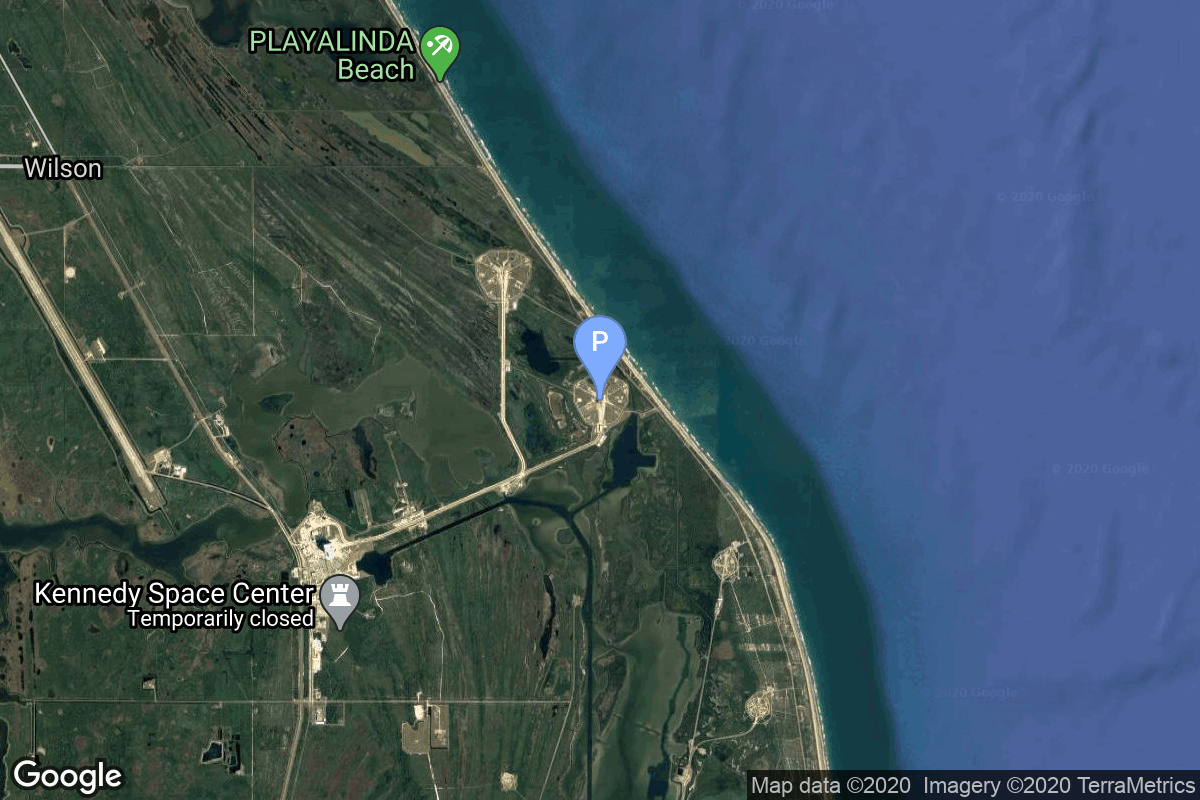
Launch Complex 39A
Kennedy Space Center, FL, USA
Find the best place to watch the launch from Florida
Launch Complex 39A has witnessed the launch of 221 rockets, including 220 orbital launch attempts. While Kennedy Space Center, FL, USA, has been the site for 280 rocket launches.
The John F. Kennedy Space Center, located on Merritt Island, Florida, is one of NASA's ten field centers. Since 1968, KSC has been NASA's primary launch center of American spaceflight, research, and technology. Launch operations for the Apollo, Skylab and Space Shuttle programs were carried out from Kennedy Space Center Launch Complex 39 and managed by KSC. Located on the east coast of Florida, KSC is adjacent to Cape Canaveral Space Force Station (CCSFS).
Rocket
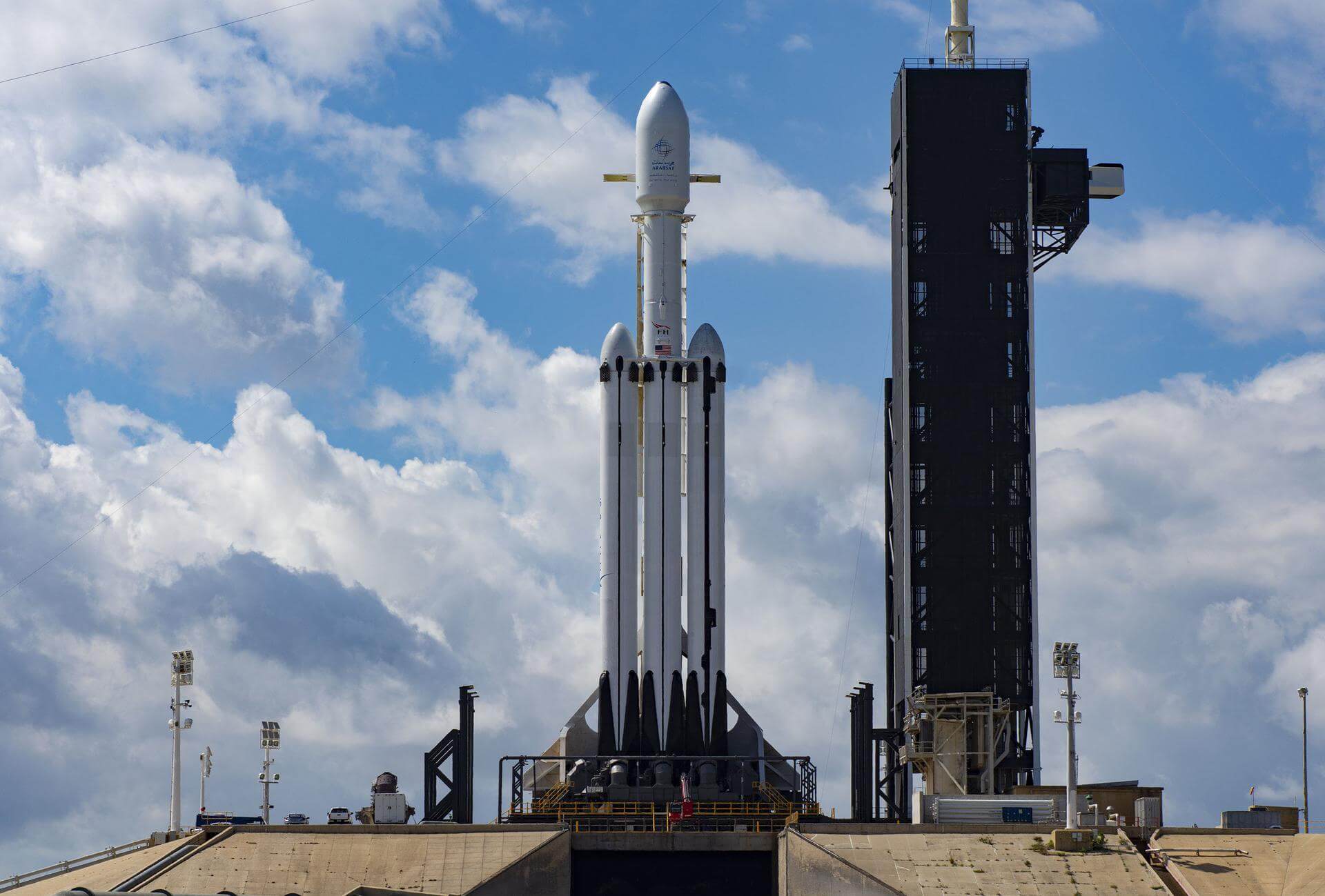
SpaceX Falcon Heavy
The Falcon Heavy is a variant of the Falcon 9 full thrust launch vehicle and consists of a standard Falcon 9 rocket core, with two additional boosters derived from the Falcon 9 first stage.
Landing
Strap-On Booster B1072
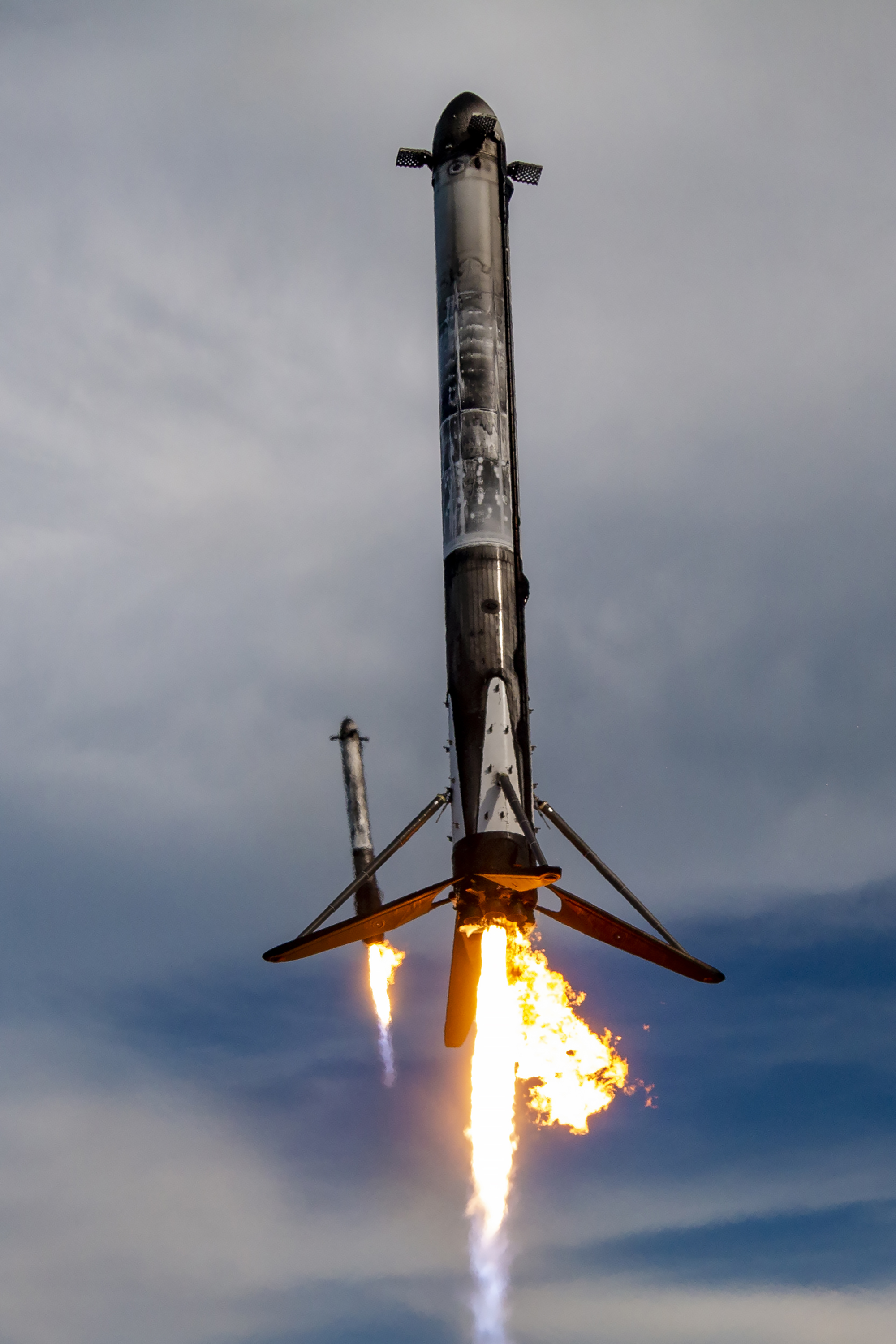
The Falcon Heavy side booster B1072 will land back at the launch site at Landing Zone 40 after its 2nd flight. Booster B1072 last launched 06/25/2024 and has seen 1 successful launches and landings. Falcon Heavy side booster first flown during the GOES-U mission.
A sonic boom is likely to occur a few minutes after launch as the booster returns to the launch site. Be prepared for a loud but thrilling experience! Learn more about rocket launch sonic booms
Landing Zone 40 - LZ-40
Landing Pad at SLC-40 for Falcon 9 boosters. Built as an replacement for LZ-1 & LZ-2.
Return to Launch Site - RTLS
A return to launch site usually means that after stage separation the booster flips and does a burn back towards the launch site, landing near where it initially launched from.
Strap-On Booster B1075
The Falcon Heavy side booster B1075 will land back at the launch site at Landing Zone 2 after its 22nd flight. Booster B1075 last launched 10/22/2025 and has seen 21 successful launches and landings. Falcon 9 Block 5 booster first used for the Starlink Group 2-4 mission. Converted to a Falcon Heavy booster in 2026 after 21 launches.
A sonic boom is likely to occur a few minutes after launch as the booster returns to the launch site. Be prepared for a loud but thrilling experience! Learn more about rocket launch sonic booms
Landing Zone 2 - LZ-2
LZ-2 Pad located at Cape Canaveral Space Force Station at the previous LC-13. Directly next to LZ-1
Return to Launch Site - RTLS
A return to launch site usually means that after stage separation the booster flips and does a burn back towards the launch site, landing near where it initially launched from.
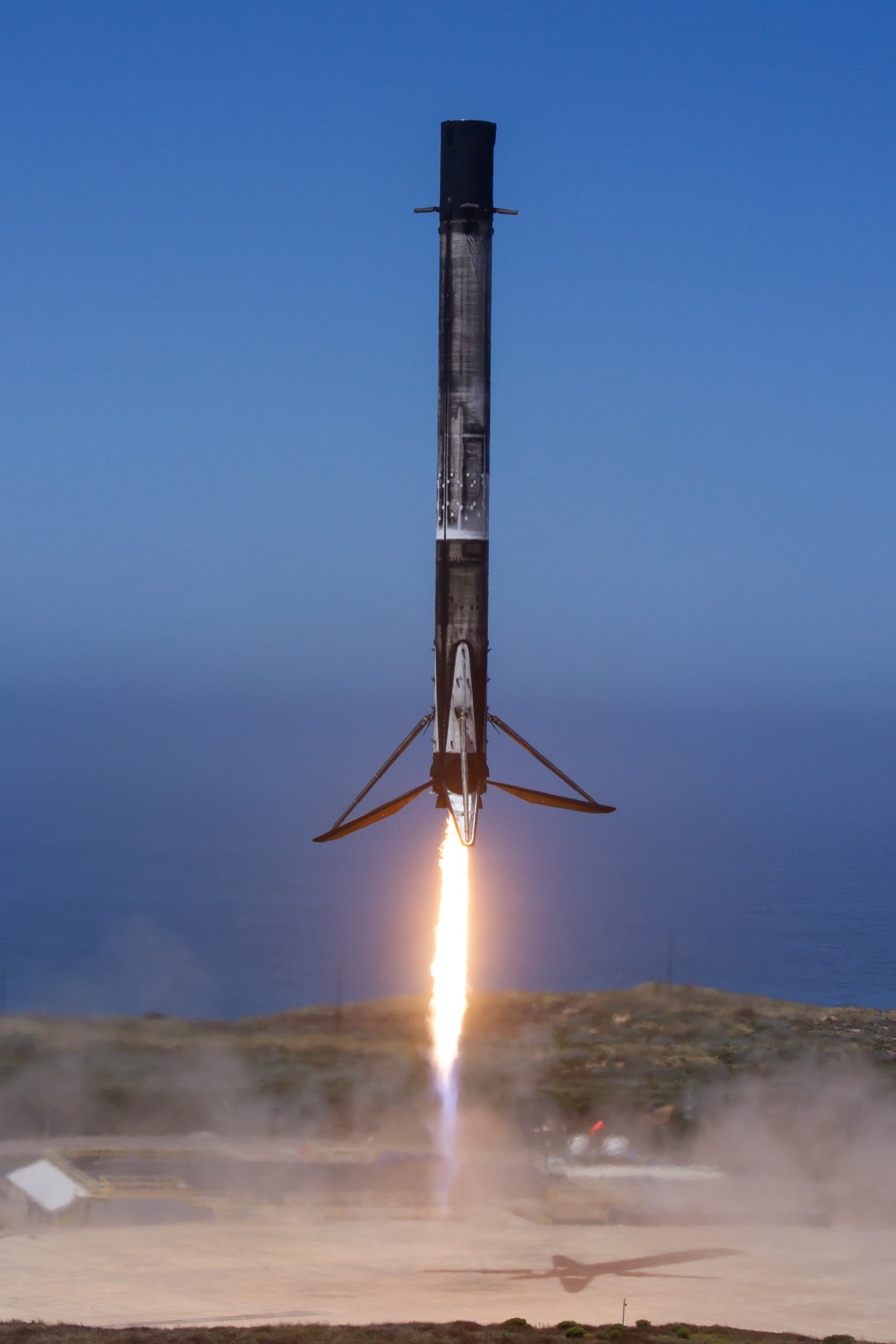
Core B1098
The Falcon Heavy center core B1098 will be expended. Booster B1098 last launched unknown and has seen 0 successful launches and landings. Falcon Heavy core booster.
Atlantic Ocean - ATL
Atlantic Ocean
Expended - EXP
Vehicle did not perform any landing operations after launch
Agency
SpaceX
Space Exploration Technologies Corp., known as SpaceX, is an American aerospace manufacturer and space transport services company headquartered in Hawthorne, California. It was founded in 2002 by entrepreneur Elon Musk with the goal of reducing space transportation costs and enabling the colonization of Mars. SpaceX operates from many pads, on the East Coast of the US they operate from SLC-40 at Cape Canaveral Space Force Station and historic LC-39A at Kennedy Space Center. They also operate from SLC-4E at Vandenberg Space Force Base, California, usually for polar launches. Another launch site is being developed at Boca Chica, Texas.

